
Engaging Gen Z and Millennial Museum Visitors
![]()
Summary
As Gen Z and Millennial audiences reshape museum expectations, creating engaging and accessible exhibition experiences has never been more important. This blog explores how clear interpretation, intuitive signage and thoughtful display design can help museums connect with younger visitors while maintaining a premium, museum-grade experience.
“I define a participatory cultural institution as a place where visitors can create, share, and connect with each other around content.”
Nina Simon, The Participatory MuseumIn April 2024, the National Gallery launched its 200 Creators programme, commissioning digital creators to make content to mark the institution’s Bicentenary. Within a year, the initiative had amassed 42 million views and 2.2 million engagements across various social media channels, including TikTok and Instagram.
As well as expanding the gallery’s digital reach, those metrics signal a specific challenge for the physical museum: maintaining the attention of an audience hard-coded on visual storytelling and split-screen consumption.
Indeed, meeting the expectations of this new generation of museumgoers is the art of removing friction; crafting an environment that feels accessible, without devaluing a collection’s substance or cultural value.
By prioritising clean labelling and a clear visual hierarchy, curators provide the necessary infrastructure for a "deep dive." It’s an approach that respects the visual literacy of younger visitors – hypersensitive to clunky, unintuitive design – one that allows them to navigate the space with the same fluid precision they expect to encounter online.
![]()
Clear, intuitive visual language
How museum label holders improve engagement
The American Alliance of Museums recently published early findings from Made By Us research into Gen Z engagement. Among the practical signals highlighted were jargon-free titles, strong youth collaboration, active social channels, free or low-cost access points, and clear staff information online.
In short: younger audiences respond well to clarity, transparency and directness.
Inside an exhibition, for information displays, those same principles apply. The V&A’s guidance on gallery text advocates writing that is interesting, engaging, and accessible to a wide audience. Exactly the kind of balance museums should lean towards for millennial and Gen Z visitors, for whom long, dense blocks of text can quickly lose their attention.
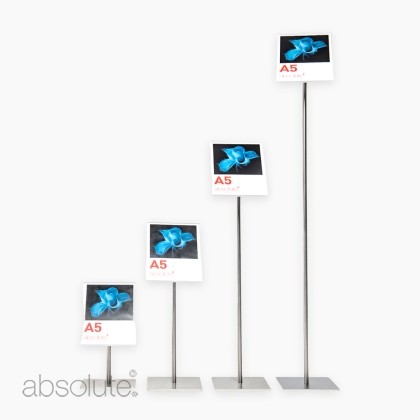
Clean visual language begins with restraint. Labels should feel easy to approach, with a clear title structure, sensible line length and enough breathing room around the text. Absolute’s standard Label Holder and Freestanding Label Holder are perfect for that mode of presentation; their slim, aluminium-backed format keeps interpretation close to the object without creating visual clutter, helping the display retain a contemporary, polished finish.
For maintaining engagement, the goal is often to create a layered encounter. A visitor may first read the object name, then a short interpretive line, then return to the longer text once something has caught their attention. Effective labelling will support those natural rhythms of interaction.
Un langage visuel clair et intuitif
Comment les étiquettes des musées favorisent l’engagement
L’American Alliance of Museums a récemment publié les premiers résultats de l’étude « Made By Us » sur l’engagement de la génération Z. Parmi les éléments concrets mis en avant figuraient des titres sans jargon, une collaboration étroite avec les jeunes, des réseaux sociaux actifs, des points d’accès gratuits ou à faible coût, ainsi que des informations claires fournies par le personnel en ligne.
En résumé : les publics plus jeunes réagissent favorablement à la clarté, à la transparence et à la franchise.
Au sein d’une exposition, ces mêmes principes s’appliquent aux supports d’information. Les recommandations du V&A concernant les textes d’exposition préconisent une rédaction intéressante, captivante et accessible à un large public. C’est exactement le type d’équilibre vers lequel les musées devraient tendre pour les visiteurs de la génération Y et de la génération Z, pour qui de longs blocs de texte denses peuvent rapidement faire perdre leur attention.
Un langage visuel épuré commence par la sobriété. Les étiquettes doivent être faciles d’approche, avec une structure de titre claire, une longueur de ligne raisonnable et suffisamment d’espace autour du texte. Le porte-étiquette standard et le porte-étiquette autoportant d’Absolute sont parfaits pour ce type de présentation ; leur format fin, avec un dos en aluminium, maintient l’interprétation à proximité de l’objet sans créer d’encombrement visuel, ce qui aide l’exposition à conserver une finition contemporaine et soignée.
Pour maintenir l'intérêt du public, l'objectif est souvent de créer une expérience en plusieurs étapes. Un visiteur peut d'abord lire le nom de l'objet, puis une brève description, avant de revenir au texte plus long dès qu'un élément a retenu son attention. Un étiquetage efficace favorisera ces rythmes naturels d'interaction.
![]()
Plan for photography without losing control
Shared images are now part of the exhibition experience
Many museums now integrate visitor photography as a standard component of the gallery experience. The V&A permits personal filming and photography subject to essential safety and equipment protocols. And, while UNESCO has expressed concern regarding the destructive potential of "selfie-tourism" at major historical landmarks, it distinguishes the museum selfie as an immediate, self-directed engagement with works on display – a shift that allows institutions to leverage a pre-existing appetite for participation to connect with audiences already primed for interactive cultural experiences.
Of course, this doesn’t mean that every gallery needs dedicated provisions for those ever-desired Instagram moments; younger visitors are often more responsive to subtle visual opportunities. Strong sightlines, well-composed groupings of objects, and a display environment free of distracting hardware all contribute to spaces people want to photograph.
![]()
Give the text room to breathe
Skimmable does not mean lacking depth
One of the most common misconceptions about younger audiences is the idea that brief attention spans require simplistic interpretation. In practice, many younger visitors are highly curious. They will read, save, revisit, and discuss exhibition content when it is well structured. The problem often lies with access.
The AAM’s accessible communications guidance frames inclusive communication through universal design principles, calling for approaches that are equitable, intuitive and straightforward. The language is highly relevant to museum interpretation aimed at mixed-age audiences. A label system that is easier to read, easier to approach and easier to navigate serves young adults well, and improves the experience for young museumgoers.
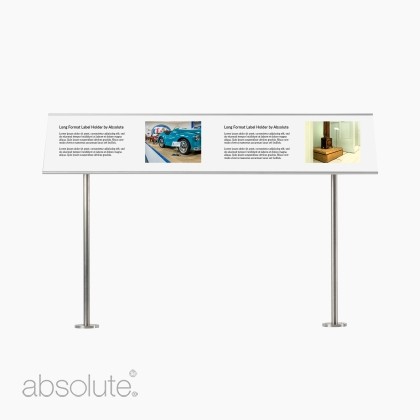
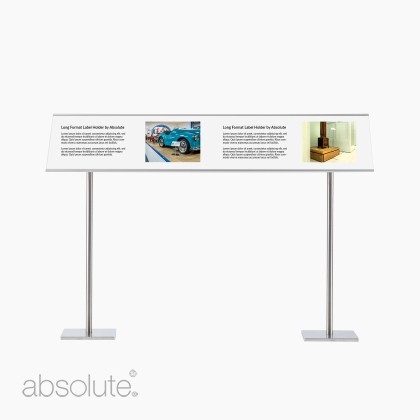
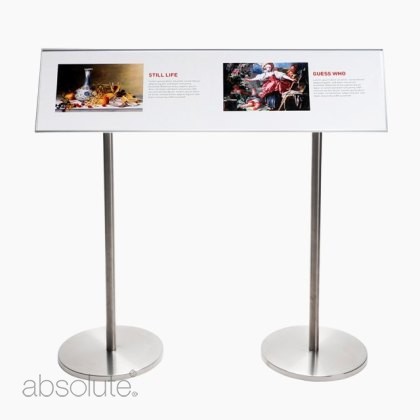
The presentation simply needs to acknowledge how people actually read in galleries. The Reader Rail is designed to provide a more continuous narrative with room for text and images in one accessible format. Its angled presentation and linked sections help create a linear reading experience that can sit alongside objects without overwhelming them. For multilingual interpretation or extended labels, the Pinnacle Label Holder Long Format also offers a smart solution to keep longer copy elegant and readable.
Keep the finish premium
Contemporary interpretation still needs material quality
Younger audiences are deeply attuned to visual culture, engaging daily with highly polished digital interfaces, branded environments and carefully art-directed content. In a museum, this can translate into high expectations for finish, consistency and detail. Poorly placed labels, inconsistent signage or reflective surfaces can quickly make a display feel dated.
Strong interpretation design has always depended on clarity and understatement. Absolute’s museum-grade signage systems do not compete with the object for attention, with the added practical advantage of adapting as audience behaviour changes.
Museums working to attract younger visitors often trial new routes through a show, revise supporting text based on user testing, or add social prompts and contextual information once the exhibition is live. Flexible, modular interpretation systems make that process much easier, while preserving a museum-grade finish.
If you’re planning a youth-focused exhibition and want interpretation that feels clear, contemporary, and museum-grade, Absolute’s team can help you shape the right approach with premium signage and information systems suited to modern visitor behaviour.
Talk with Absolute Products about your gallery and exhibition needs.

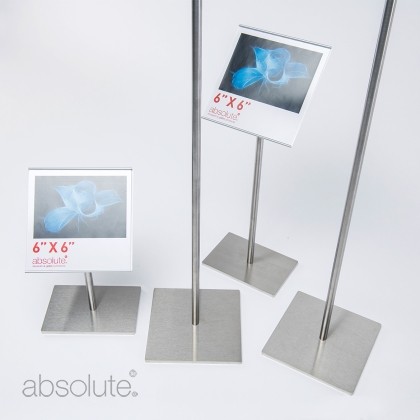 Pinnacle Label Holder Freestandingfrom €114.30 (ex VAT)
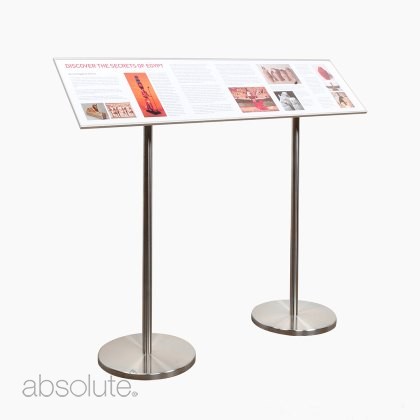 Reader Railfrom €590.55 (ex VAT)
-
Posted by Jack Turner
21st May 2026
FREE Delivery to the US for all orders over $1500
Our New Digital Brochure is Now Available - Click Here